








THE JULIA BLANKET
Your step-by-step guide to making your masterpiece
Hey there, stitch superstar! You’ve just unlocked the secret sauce to making your very own crochet blanket, and we’re excited to be stitching it out with you.
Whether you're learning for the first time, or already have a few crochet masterpieces under your belt, these instructions will cover everything you need to know. We’ll take you from “how do I hold this hook?” to “look what I made!” — one cosy row at a time.
Heads up! You'll need the physical pattern that came with your kit as well as this online guide. The pattern contains the specifics, this guide gives you the extra layer of detail.


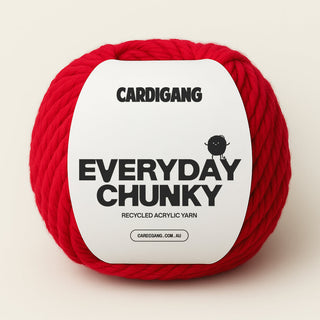
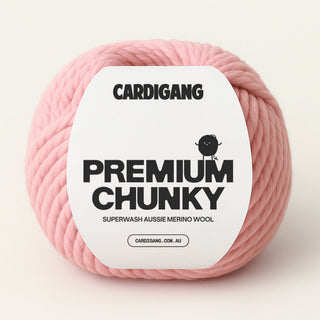
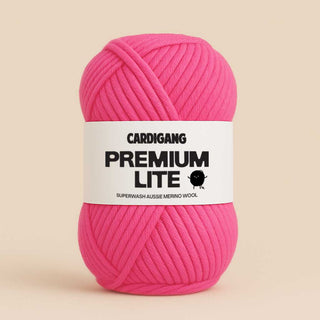
INCLUDED IN YOUR KIT


PRACTICE MAKES PERFECT (Or CLOSE ENOUGH!)
Before we dive into the good stuff, let’s warm up those hands and your hook. Think of this like stretching before a workout, except comfier, cuter, and way more fun.
Grab some of the yarn from your kit (just a little, you’ve got enough to spare!), and get familiar with the motions. Try out the stitches you’ll be using in this pattern. This is your time to mess it up, try again, and feel things out — no pressure, no judgement, just you and your new fave hobby.
Bonus: Practising now = fewer headaches later (trust us on this one).
For this practise session we recommend you crochet a flat square - it's the best way to learn the stitches and once you've got that mastered you can move into the pattern and lean the magic ring.
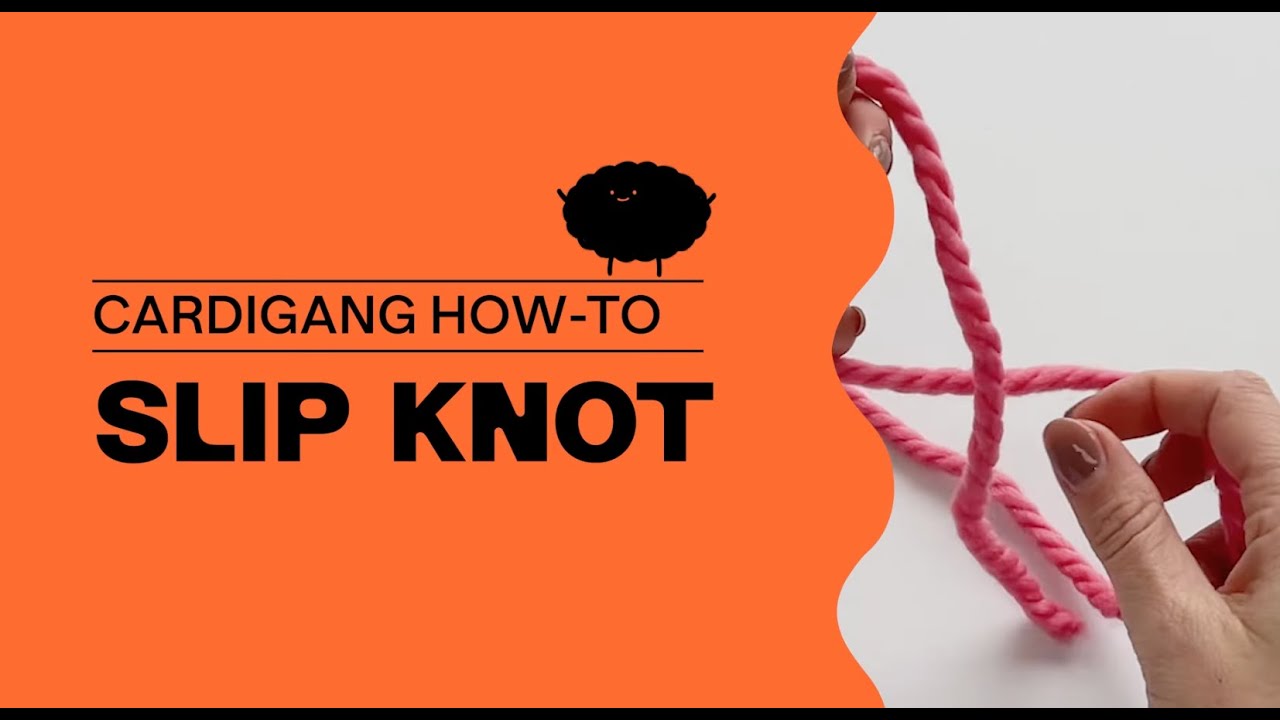
Slip Knot
AKA how to attach your yarn to your hook!
Chain
In this video we show you how to make a foundation chain - the starting point for most crochet projects.
Double Crochet
This is the main stitch you'll use in this pattern. Once you've got this, you're ready to start!

TEST YOUR GAUGE
Once you’re feeling comfy with the stitches, it’s time to check your gauge. We know, we know — it sounds technical, but it’s really just about making sure your tension matches the pattern.
Why? Because different crocheters = different stitch tightness. And we want your finished masterpiece to fit like a dream.
So grab your measuring tape, crochet up a little swatch (there’s a guide for that at the link below!), and let’s make sure you’re on track before the main event begins.
 How to test your gauge
THE JULIA BLANKET
If done correctly, your 10x10cm crochet swatch should measure 13 stitches wide, and 10 rows high when made in double crochet stitches using your 5mm hook.
Your finished blanket will measure finished approximately 80x90cm when laying flat.


Repeat after me:
“I solemnly swear to crochet bravely, unpick calmly, and pretend I meant to do that.
I accept that chaos is part of the craft, and possibly part of my personality.
I will finish what I start… eventually.”


THE CAPE

We crochet our blanket in one piece, working in rows of granny stripe which is created by doing clusters of double crochet. We will finish with a border of single crochet. Your finished blanket will measure finished approximately 80x90cm when laying flat.

First you'll make your foundation chain. Chain a total of 101 stitches. The loop on your hook doesn't count as a stitch.
For this first double crochet (DC) you'll work into the fourth chain from the hook. By working into the forth chain from the hook we get the height we need to continue the row. Once that first DC is done, you'll do another DC into that same space. This counts as your first cluster.
*Skip two chain stitches, then do 3 DC into the next stitch.* to create the second cluster.
Repeat *-* along the row until you have 3 chain stitches left. Skip two stitches, then do 2 DC into your last stitch. Chain 3 and turn your work.
You should now have 33 clusters, including the sides.
Well done, you now know how to do a granny stitch!
From now on you'll be working into the spaces between the clusters from the previous row.
Do 3 DC into the first space between the clusters from the row below. Then continue doing 3 DC into each space between clusters until your reach the end of the row. You’ll have 32 clusters in this row.
Chain 3 and turn your work.
Do a DC into the same stitch as your chain 3. Then keep working into the spaces between clusters along this row. So do 3 DC into each space between clusters until you reach the end of your row. Do 2 DC into the chain 3 from the row before. This row will have 33 clusters, including the sides.
Row 2 and 3 make up the sequence for the rest of the blanket. So repeat rows 2 and 3 working through the 6 balls of yarn.
You need one ball reserved for the border of single crochet stitch.
With your yarn still attached to the corner of your blanket, you’ll chain 1 and turn your work.
Our border is made by doing single crochets all the way around the end.
For the top and bottom of the blanket, you'll do a single crochet (SC) into each stitch along the row. Nice and easy. For the sides, it's a little different.
So SC along the top edge, when you reach the corner do 4 SC into the corner space. The 4 SC in the corner fan out to reach around the corner.
Next, SC down the side edge of your blanket. There aren’t stitches to work into here, but you’ll do approximately 2 SC per row. If your edging isn’t straight or is bunching add a few more SC in as needed. Count the stitches so you can replicate the number of stitches on the opposite side.
When you reach the next corner do 4 SC into the corner space.
SC along the foundational edge of your blanket. Do approximately 2 SC into each space and 1 SC into the bottom of the cluster.
Complete one more corner by doing 4 SC into the corner space.
Then, SC the last side edge like you did the opposite side. When you reach the final corner, slip stitch into your first SC to join the edge. Then fasten off.
Use your darning needle to weave any loose ends back into the blanket.
BLOCKING (Optional)
The final step in finishing a piece is to block it. This step is optional and not all beginner crocheters will block their work but it can improve the overall shape and finish of your piece.
Blocking is a process where you wet your piece to set the finished size and even out the stitches.
Soak your piece in cool water. You only need to let your piece sit in the water for a few minutes and make sure the full piece is completely wet.
Remove your piece from the water and dry it off by rolling it in a towel. You want to get us much of the moisture out of it as possible at this point but be gentle! You don't want to stretch the piece.
Transfer your damp piece to a flat surface to block it on. If you've got a blocking mat - great! otherwise a towel will work. The surface needs to be somewhere where your work can lie flat and can stay there until it fully dries so that the shape sets properly. Make sure it's not a surface that can be easily damaged by having something wet sitting on it!
Arrange your piece so the right side is facing up and the shape is as you'd like it. If you've got a measuring tape you can measure and adjust the piece so it's the correct size.
Allow the work to air dry - this can take a few days. You can also use a hair dryer to speed up the process, just use a light heat and don't concentrate the air in one spot.

