








Learning to knit is meant to be relaxing.
So why does it sometimes feel like your yarn is personally attacking you?
If your stitches look weird, your project keeps changing shape, or you’re wondering if you’re just “bad at knitting” - stop right there. You’re not bad. You’re learning. And most beginner knitting mistakes are fixable without ripping everything out and rage-quitting.
Let’s walk through the most common beginner knitting mistakes and exactly how to fix them, calmly, without starting over.

Most beginner knitting mistakes are part of the process — and once you know what they look like, they lose their power.
1. Knitting Too Tight (a.k.a. Fighting the Yarn)
The mistake:
Your stitches are so tight you can barely get the needle through. Your hands hurt. Your knitting looks stiff.
Why it happens:
Beginners think tighter = better. It doesn’t. It just makes knitting miserable.
How to fix it (no restarting required):
Relax your grip — you’re guiding the yarn, not strangling it
Let the needle tips do the work
Make sure you're sliding your stitches down your needle as you knit, don't let them bunch up at the narrowest point of your needles.
👉 Chunky yarn is especially forgiving here, which is why we love it for beginners.
2. Knitting Too Loose (The Opposite Chaos)
The mistake:
Big gaps between stitches. Floppy fabric. Everything feels… wobbly.
Why it happens:
Overcorrecting after being told “don’t knit too tight.”
How to fix it:
Keep your stitches snug on the needle so they're not dangling, you don't want to see gaps between the stitch and the needle.
Use consistent hand movements
Remember, good tension comes with practice - don't quit
3. Accidentally Adding Stitches
The mistake:
Your scarf started with 20 stitches. Now it has 27. Surprise!
Why it happens:
Accidentally knitting into the loop between stitches
Yarn overs you didn’t mean to make, where you wrap the yarn around the needle more than once
Knitting the first stitch twice - really common especially if your yarn tail and your work isn't hanging down when you start a new row. The tail can wrap around the needle making it look like the first stitch is actually 2 stitches
How to fix it:
Count your stitches every few rows so you can catch a mistake before it gets worse
Learn what a stitch actually looks like on the needle
If you spot it early, just knit or purl two stitches together on the next row.
No need to frog the whole thing. Promise.
4. Accidentally Losing Stitches
The mistake:
Your project is getting narrower and you don’t know why.
Why it happens:
Dropped stitches
Forgetting the last stitch of a row
Letting a stitch slip off unnoticed
How to fix it:
Count stitches regularly (boring but effective)
If you drop a stitch, don’t panic. Use a crochet hook or needle tip to pull it back up
Catch dropped stitches as soon as you see them
Dropped stitches look dramatic but they’re very fixable.
More of a visual learner? Check out our top tips for new knitters video.
5. Uneven Edges That Look… Questionable
The mistake:
Your edges are loopy, bumpy, or wildly inconsistent.
Why it happens:
Edge stitches are weirdly the hardest part of knitting and will often be a little looser than the rest of the row.
How to fix it:
Pay extra attention to the first and last stitch of each row
Don’t pull tighter on the first stitch
Consider slipping the first stitch of each row (a great beginner trick)
Messy edges are normal early on. Blocking can also work miracles later.
6. Choosing the Wrong Yarn for Your First Project
The mistake:
Thin, slippery, dark, fuzzy, or scratchy yarn that hides your stitches.
Why it happens:
Pretty yarn ≠ beginner-friendly yarn.
How to fix it:
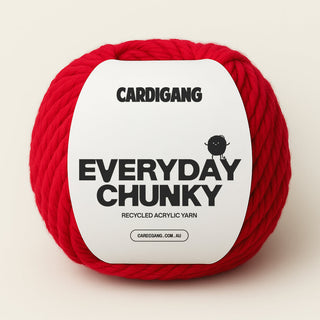
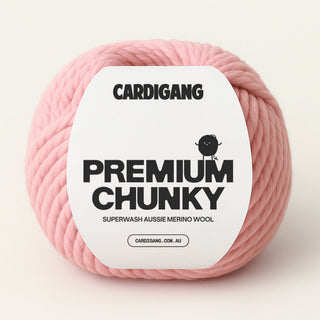
Choose chunky or super chunky yarn
Light colours show stitches clearly
Smooth yarn (like merino) is easier than novelty fibres
This single choice can make knitting feel 10x easier.
7. Using the Wrong Needle Size
The mistake:
Your knitting feels impossible… but it’s actually the tools.
Why it happens:
Patterns and yarn labels are confusing when you’re new. It's actually one of the main reasons Cardigang was started - to remove that guess work!
How to fix it:
Match your needle size to your yarn weight
When in doubt, size up for beginners
If stitches won’t move easily, your needles are probably too small
Needles should feel like helpers, not obstacles.
8. Expecting It to Look Perfect Immediately
The mistake:
Comparing your first project to someone’s 10-year knitting glow-up.
Why it happens:
Instagram lies (a little).
How to fix it:
Accept that your first piece is a practice piece
Focus on learning, not perfection
Remember: uneven stitches even out with time and blocking
Every good knitter has a tragic first scarf. It’s tradition.
9. Starting with a Project That’s Too Hard
The mistake:
Jumping straight into a jumper, lace, or tiny needles because you’re ambitious.
Why it happens:
Overconfidence + cute patterns.
How to fix it:
Start with flat, repetitive projects. Scarves, blankets, beginner jumpers and cardigans are perfect (AKA Cardigang styles made for beginners!)
Choose patterns written for beginners
Build confidence before complexity
Knitting should feel achievable, not like a test.
10. Quitting Too Soon
The mistake:
Deciding you’re “not a knitting person” after one frustrating session.
Why it happens:
Unrealistic expectations and no support.
How to fix it:
Take breaks
Ask questions
Use structured guides or beginner kits designed to remove guesswork
Knitting clicks, but rarely on day one.

The Big Truth Beginners Need to Hear
You don’t need to start over every time something goes wrong.
You don’t need to be “naturally good” at knitting. And you definitely don’t need to suffer through it alone.
Most beginner knitting mistakes are part of the process — and once you know what they look like, they lose their power.
If you want everything chosen for beginners — the right yarn, needles, and a pattern that won’t send you into a spiral — that’s exactly why we make beginner knitting kits. Less guessing. More knitting. Fewer “what am I doing wrong?” moments.
You’ve got this. And yes, even if your scarf looks a little unhinged right now 🧶