




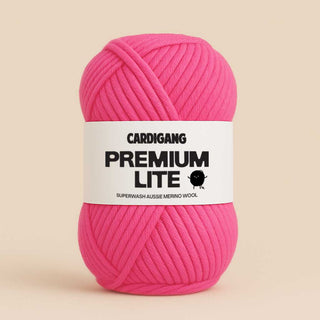


Welcome to your Cardigang learning hub.
If you’ve landed here, chances are you’ve just opened one of our knitting or crochet kits and are wondering what happens next.
Good news: you’re exactly where you need to be.
This guide is designed specifically for people who have a Cardigang kit on the way or already in their hands. It will walk you through the core techniques used in our patterns, link you to our tutorials, and help you troubleshoot if things get a little tangled along the way.
Grab your yarn, your sticks (or hook), and let’s get into it.
WHAT THIS GUIDE COVERS
WHAT THIS GUIDE COVERS WHAT'S INSIDE YOUR CARDIGANG KIT SASHAY INTO THE WONDERFUL WORLD OF CROCHET THE CROCHET STITCHES YOU'LL USE MOST OFTEN GO FROM ZERO TO KNITTING HERO THE KNITTING STITCHES YOU'LL USE MOST OFTEN VIDEO TUTORIALS 🎥 BEGINNER TIPS BEFORE YOU START HOW TO CARE FOR YOUR HANDMADE MASTERPIECE TROUBLESHOOTING COMMON PROBLEMS
What this guide covers
Inside this page you’ll find:
The basics of knitting and crochet
The core stitches used in Cardigang kits
Helpful video tutorials
Tips for caring for your finished piece
Common beginner mistakes (and how to fix them)
If you’re working through one of our kits, this page acts as your go-to reference whenever you get stuck.
What’s Inside Your Cardigang Kit
First things first. Let’s talk about what you’ve got in front of you.
Your kit includes everything you need to make your project from start to finish. No late night craft store runs required.
Inside your kit you’ll find:
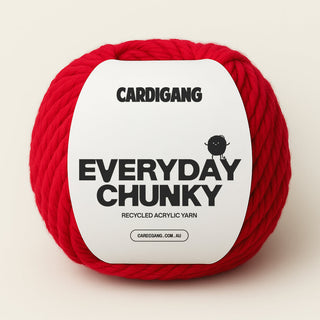
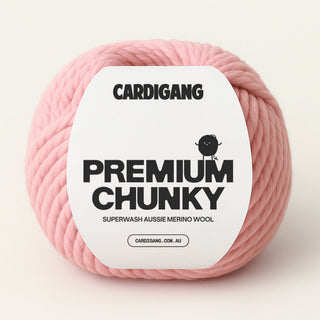
Beautiful, beginner-friendly yarn
The tools you need (knitting needles or crochet hook)
Step-by-step instructions for your project
Links to our video tutorials - scan the QR code
A “Made by Me” tag for bragging rights
A drawstring project bag to keep everything together
In other words, you already have everything you need to get started.
Now let’s learn the techniques your kit will use.


SASHAY INTO THE WONDERFUL WORLD OF CROCHET
If you’re working on a crochet kit, you’ll be using a crochet hook to pull loops of yarn through other loops to create fabric.
Most Cardigang crochet projects are built from just a few beginner stitches.
Crochet works one stitch at a time, which is why many beginners find it very approachable.
THE CROCHET STITCHES YOU'LL USE MOST OFTEN
| CHAIN STITCH (CH) | This creates the foundation of your project and is usually the first step. |
| SINGLE CROCHET STITCH (SC) |
A short, dense stitch used in lots of beginner projects. |
| HALF DOUBLE CROCHET STITCH (HDC) |
Sits between single and double crochet and creates a slightly taller stitch. |
| DOUBLE CROCHET STITCH (DC) |
A taller stitch that helps projects grow faster. |
HOW TO HOLD YOUR HOOK
Our crochet hook is the tool we use to create our work. If you're right-handed you'll hold the hook in your right hand, if you're left-handed, hold it in your left (lefties... there's a note about left-handed crochet further down the page too!).
So let's learn how to hold it. Grab the hook between your thumb and forefinger, with your thumb resting on the dent or grip and your index finger on the other side of the hook, like you're holding a knife. This type of grip is the way we suggest you start but each individual will have a slightly different way of holding the hook. You'll then hold the yarn you're working in your other hand.

go from zero to knitting hero
If your kit includes knitting needles, you’ll be creating fabric using two needles and a series of loops called stitches.
Knitted fabric is known for being soft, stretchy, and perfect for garments like sweaters and scarves.
Once you learn knit and purl stitches, you can create an incredible variety of patterns and textures.
THE KNITTING STITCHES YOU'LL USE MOST OFTEN
| CAST ON | This is how you get stitches onto your needles to begin your project. |
| KNIT STITCH |
The most fundamental stitch in knitting. Also known as plain stitch. |
| PURL STITCH |
The reverse of the knit stitch. Together these create most knitting textures. |
| CAST OFF |
How you finish your project so the stitches stay secure. Also known as binding off. |
VIDEO TUTORIALS 🎥
Every Cardigang kit includes links to step-by-step video tutorials that walk you through the techniques used in your pattern.
Scan the QR code to take you directly to the videos you'll need for your kit.
Below is our video library with videos on all the basics stitches, use this as a reference and your on-demand teacher.
SLIP KNOT
The very first step - attaching your yarn to your needle or hook.
CHAIN STITCH (CH)
This creates the foundation of your project and is usually the first step.
SINGLE CROCHET (SC)
The single crochet stitch (sc) is one of the simplest and most fundamental crochet stitches. This stitch forms a dense, tight fabric ideal for projects like amigurumi, homewares, and accessories.
DOUBLE CROCHET (DC)
The double crochet stitch (dc) is a versatile and commonly used crochet stitch that creates a looser, more open fabric compared to single crochet. This stitch is perfect for blankets, garments, and projects that require a bit more drape and flexibility.
HALF DOUBLE CROCHET (HDC)
The half double crochet stitch (hdc) is a versatile stitch that falls between single and double crochet in height. This stitch is great for creating a fabric that is both sturdy and flexible, making it ideal for garments, accessories, and home decor projects.
CASTING ON
This is how you get stitches onto your needles to begin your project.
Knit Stitch (K)
The knit stitch is the most basic and essential stitch in knitting. It’s what you’ll use to create the majority of your projects.
Purl Stitch (P)
The purl stitch is essentially the reverse of the knit stitch. Mastering both knit and purl stitches opens the door to a world of textures and patterns.
CAST OFF
How you finish your project so the stitches stay secure. Also known as binding off.
View the comprehensive video library
Beginner Tips Before You Start
A few things that will make your first project much easier:
Your tension doesn’t need to be perfect.
Everyone’s first piece is a little wobbly. That’s part of the charm. Don't pull too tightly even if you're tempted, relax and go with the flow!
Take it slow.
Knitting and crochet are meant to be relaxing, not rushed. Don't rush, take your time and remember, learning something new doesn't happen instantly.
Mistakes happen to everyone.
Even experienced knitters drop stitches sometimes.
The important thing is to keep going.
HOW TO CARE FOR YOUR HANDMADE MASTERPIECE
You’ve put the time in, so it’s worth taking care of your finished project properly.
Most knitted and crocheted pieces should be:
Hand washed in cool water
Dried flat to keep their shape
Stored folded rather than hung
Treat your handmade piece gently and it will last for years.
WASHING
- Before you go in for the full wash, consider if you can spot-clean first.
- Wash in cool water with a wool detergent.
- Roll in a clean towel to remove excess water and dry flat out of direct sunlight.

GROOMING
- It's normal for your woollen pieces to shed or pill (aka get a bit bally).
This is due to the delicate nature of the woollen fibres and tends to happen in places where your knit is coming into contact or rubbing against another surface or on itself - like under the arms.
To get rid of the balls, we recommend you use your fingers and gently remove them from the garment. Work in the one direction and don't overdo it!
You can also use an electric depillar (electric fabric shaver) to groom your knit, just make sure you're gentle.
You can also pat your kit (just with your hands) to help bond the fibres and reduce future shedding and pilling.

BLOCKING
Blocking your knitted or crocheted piece is optional and not all beginners will block their work but it can improve the overall shape and finish of your piece and can help it to last longer.
Blocking your work is a process where you wet your piece to set the finished size and even out the stitches.
You can choose to block your work before you seam it together, or after. if you block before seaming together you might get a better result with your seaming because the stitches will be more lined up.

STORAGE
It's best to fold your handmade pieces and store them somewhere where they can remain flat, rather than hanging them.
Folding them helps them to keep their shape over time. A drawer or shelf in the wardrobe out of direct sunlight is great.
If you can store them in a sealable cotton bag that's even better because moths can't get through cotton!

TROUBLESHOOTING COMMON PROBLEMS
Even the best of us drop a stitch or two! Here are some quick fixes for common knitting hiccups:
What if I need help with my project?
We’ve got you covered! You can reach out to us anytime at stitchup@cardigang.com.au. We also have a friendly and welcoming online community where you can share your progress, ask questions, and get tips from fellow makers.
I’ve dropped a stitch, what do I do?
Don’t panic! Dropping a stitch happens to the best of us. Check out our how-to videos and guides for step-by-step instructions on how to pick up a dropped stitch and get back on track.
My knitting/crochet looks uneven, any tips?
Uneven stitches are common, especially when you’re just starting out. Make sure you’re maintaining consistent tension and take your time. Practice makes perfect!
I’m confused by the pattern instructions, help!
We’re here for you! If you’re stuck on a part of the pattern, reach out to us at stitchup@cardigang.com.au. We can provide additional guidance and support to help you through it.
I’m having trouble with my tension, any suggestions?
Consistent tension takes practice. Try to relax and maintain a steady rhythm. Holding the yarn differently or adjusting your grip can also help. Check out our tips on achieving even tension.
Can I undo my work if I make a mistake?
Absolutely! Knitting and crochet are very forgiving crafts. You can undo stitches to correct mistakes. We have resources available to help you “frog” your work (rip it, rip it!) and start again.
You’re Officially in Your Hobby Era
Learning to knit or crochet can feel a little confusing at first, but stick with it.
Soon you’ll look down at your project and realise something pretty great:
You made it.
And once you finish your first piece, the next project suddenly feels very tempting.
Welcome to the Cardigang.
